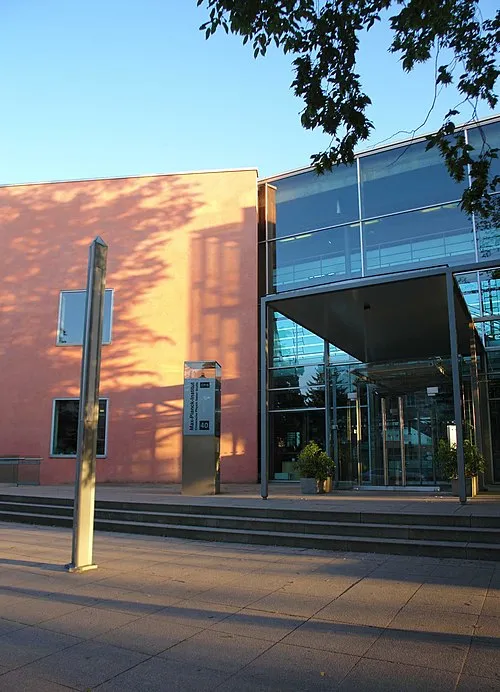
Bachelor
Englisch
Mathematik, Naturwissenschaften
International Max Planck Research School for Chemistry and Physics of Quantum Materials
Bachelor
Über das Programm
The International Max Planck Research School for Chemistry and Physics of Quantum Materials (IMPRS-CPQM) is a joint PhD programme between the Max Planck Institute for Chemical Physics of Solids (MPI CPfS) in Dresden, Germany, the Technische Universität Dresden (TU Dresden), and the University of St Andrews in Scotland. By working together, we create a highly attractive overall package of PhD level research on solid-state chemistry and condensed matter physics. In addition to our exciting research opportunities, we offer each student in IMPRS-CPQM an individually tailored programme of graduate courses, optimising each programme for the student's needs based on his or her background, expertise and research project. One fundamental component of the curriculum are our core courses that lay a foundation for the interdisciplinary training in our programme. Furthermore, we give our students access to a wide range of other graduate courses that are either offered by the universities involved in IMPRS-CPQM or at the MPI CPfS. Research work and graduate courses will be complemented by non-academic training such as skills courses. A full description of our PhD training is available on our website: https://imprs-cpqm.mpg.de/105837/PhD-training.
▶ Den originalen englischen Text anzeigen
The International Max Planck Research School for Chemistry and Physics of Quantum Materials (IMPRS-CPQM) is a joint PhD programme between the Max Planck Institute for Chemical Physics of Solids (MPI CPfS) in Dresden, Germany, the Technische Universität Dresden (TU Dresden), and the University of St Andrews in Scotland. By working together, we create a highly attractive overall package of PhD level research on solid-state chemistry and condensed matter physics. In addition to our exciting research opportunities, we offer each student in IMPRS-CPQM an individually tailored programme of graduate courses, optimising each programme for the student's needs based on his or her background, expertise and research project. One fundamental component of the curriculum are our core courses that lay a foundation for the interdisciplinary training in our programme. Furthermore, we give our students access to a wide range of other graduate courses that are either offered by the universities involved in IMPRS-CPQM or at the MPI CPfS. Research work and graduate courses will be complemented by non-academic training such as skills courses. A full description of our PhD training is available on our website: https://imprs-cpqm.mpg.de/105837/PhD-training.
Welche Berufe eröffnet dieses Programm?
Verwandte Berufssuchen aus Daten der Bundesagentur für Arbeit (BERUFENET):
Alle Berufe entdecken →Fächer / Themenbereiche
Inorganic Chemistry
Ähnliche Programme
Environmental Engineering
Universität Kassel
Bachelor of Science (B.Sc.)
Renewable Energy Systems B.Sc. Central Campus Bochum Bachelor 7 semesters
Hochschule Bochum
Bachelor of Science (B.Sc.)
Mathematics
Universität Regensburg
Bachelor of Science (B.Sc.)
Mathematics in Finance and Industry
Technische Universität Braunschweig
Bachelor of Science (B.Sc.)
Physics
Georg-August-Universität Göttingen
Bachelor of Science (B.Sc.)
Sustainable Energy Systems
Hochschule Emden/Leer
Bachelor of Engineering (B.Eng.)
Wie bewerbe ich mich für International Max Planck Research School for Chemistry and Physics of Quantum Materials an der Max Planck Institute for Chemical Physics of Solids?
Die meisten internationalen Bewerber bewerben sich über uni-assist (Dokumentenprüfung + APS für einige Länder). Bereite dein Abitur-/Bachelor-Diplom, Zeugnisse, Sprachzertifikat (DSH/TestDaF oder IELTS/TOEFL), Motivationsschreiben und Lebenslauf vor. Nicht-EU-Studenten benötigen für das Visum auch ein Sperrkonto (~11.904 EUR/Jahr).
- Anforderungen prüfen — Überprüfe, ob dein Abschluss anerkannt ist + erfülle die Sprach-/Notenschwellen.
- Sprachzertifikat erwerben — TestDaF / DSH für deutsche Studiengänge, IELTS / TOEFL für englische.
- Über uni-assist einreichen (Nicht-EU) — Dokumentenprüfung + APS, falls dein Land dies erfordert (China, Indien, Pakistan, Vietnam usw.).
- Direkt oder über das Uni-Portal bewerben — Einige Universitäten akzeptieren Direktbewerbungen — überprüfe die offizielle Programmseite.
- Sperrkonto eröffnen + Visum beantragen — Nach der Zulassung 11.904 EUR einzahlen, Krankenversicherung abschließen, Botschaftstermin buchen.
Häufig gestellte Fragen
Kurze Antworten zu International Max Planck Research School for Chemistry and Physics of Quantum Materials an der Max Planck Institute for Chemical Physics of Solids
Wird International Max Planck Research School for Chemistry and Physics of Quantum Materials an der Max Planck Institute for Chemical Physics of Solids auf Deutsch oder Englisch unterrichtet? ▼
Dieser Bachelor Studiengang wird in Englisch unterrichtet. Stelle sicher, dass du die Sprachanforderungen (z.B. TestDaF, DSH, IELTS oder TOEFL) vor der Bewerbung überprüfst.
Wie viel kostet der Studiengang International Max Planck Research School for Chemistry and Physics of Quantum Materials? ▼
Keine Studiengebühren (nur Semesterbeitrag). Internationale Studierende sollten zusätzlich etwa 800–1000 EUR/Monat für Lebenshaltungskosten in Deutschland einplanen.
Was sind die Zulassungsvoraussetzungen für International Max Planck Research School for Chemistry and Physics of Quantum Materials an der Max Planck Institute for Chemical Physics of Solids? ▼
Typische Anforderungen sind: ein anerkannter Sekundar-/Bachelorabschluss, Nachweis der Sprachkenntnisse (Englisch) und (für Nicht-EU-Bewerber) eine uni-assist Bewerbung plus Finanzierungsnachweis (Sperrkonto ~11.904 EUR/Jahr).
Wann ist die Bewerbungsfrist? ▼
Die Bewerbungsfristen variieren: Das Wintersemester endet in der Regel am 15. Juli, das Sommersemester am 15. Januar. Bestätige die genaue Frist immer auf der offiziellen Universitätswebsite.
Kann ich während des Studiums von International Max Planck Research School for Chemistry and Physics of Quantum Materials in Deutschland arbeiten? ▼
Ja. Internationale Studierende dürfen ohne zusätzliche Genehmigung bis zu 140 volle Tage / 280 halbe Tage pro Jahr arbeiten. Nach dem Abschluss kannst du eine 18-monatige Arbeitserlaubnis zur Jobsuche beantragen.
Wie bewerbe ich mich an der Max Planck Institute for Chemical Physics of Solids — direkt oder über uni-assist? ▼
Die meisten deutschen Universitäten akzeptieren internationale Bewerbungen zur Dokumentenprüfung über uni-assist. Einige Universitäten akzeptieren Direktbewerbungen — überprüfe die Programmseite auf der offiziellen Website.