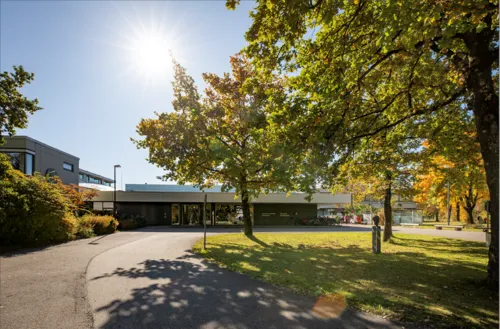
Max Planck Institute of Biochemistry
For Turkish students aiming for a scientific career in Germany, especially those keen on in-depth research in biochemistry, the Max Planck Institute of Biochemistry is a true magnet. Located in Martinsried, near Munich, this prestigious institute is part of the world-renowned Max Planck Society (Max Planck Topluluğu), hosting groundbreaking work in life sciences. Rather than a traditional university structure, the Max Planck Institute of Biochemistry focuses on advanced research and doctoral (PhD) programs, offering students and researchers a unique scientific environment. Here, you don't just attend lectures; you get the chance to directly contribute to current research as part of an international team. If you're looking to pursue a PhD in Germany, this institute opens doors to academic excellence and innovation. We'll also cover common questions from Turkish students about visa processes and the cost of living in Germany.
Quick Facts
- University Name
- Max Planck Institute of Biochemistry
- City
- Planegg (Martinsried), near Munich
- State
- Bavaria (Bayern)
- Type
- Public Research Institute
- Main Focus
- Biochemistry and Life Sciences Research
- Programs Offered
- Doctoral (PhD) Programs, Research Projects (limited bachelor's/master's collaborations)
- HRK Membership
- No
- Uni-Assist Membership
- No
Max Planck Institute of Biochemistry: Research and Academic Excellence
As its name suggests, the Max Planck Institute of Biochemistry is a world leader in biochemistry and related life sciences research. The institute specializes in a wide range of fields, including cell biology, structural biology, neuroscience, immunology, and genetics. The work conducted here typically focuses on basic sciences, leading to breakthroughs in understanding diseases and developing new treatment methods.
The institute's academic structure differs from traditional universities. Here, individual research projects and doctoral studies take precedence over structured course programs. PhD students develop their own research topics under the guidance of experienced scientists and actively participate in laboratory work. This approach allows students to not only acquire theoretical knowledge but also develop practical skills, progressing towards becoming independent researchers. Discussions often seen in forums like 'Wie viel ist ein Professor wert?' (How much is a professor worth?) highlight the critical role professors play here, not just as instructors, but as mentors and research leaders. In this sense, Max Planck Institutes offer an environment that represents the pinnacle of an academic career.
Doctoral (PhD) Programs and Application Process
The Max Planck Institute of Biochemistry attracts talented young scientists from around the world through its international doctoral programs. PhD programs at the institute typically last 3-4 years, offering students comprehensive research training along with opportunities to attend seminars, workshops, and conferences. The application process may differ from traditional university applications. The institute opens PhD positions either independently or in collaboration with partner universities. Candidates are generally expected to hold a master's degree, possess a strong academic background, and have research experience.
Applications are usually submitted directly through the institute's or the relevant research group's website. Since the institute is not a member of uni-assist (a centralized application service for international students), questions from Turkish students like 'Can I reuse my uni-assist profile opened 2 years ago?' are not applicable here; applications are made directly to the institution. The application file typically includes documents such as a curriculum vitae (CV), a motivation letter, reference letters, and transcripts. The selection process is highly competitive, and candidates are usually invited for interviews. Successful candidates must apply for a German student visa (type 41f) before starting their research. For questions like 'Is a Statement of Comparability or an equivalence certificate required for the visa application?', it's crucial to check the current requirements of the consulate or visa application centers.
Estimated Monthly Cost of Living - Munich and Surroundings
Student Spots On and Around Campus
A modern research library providing access to extensive scientific publications and databases.
A dynamic science park, home to the Max Planck Institute and various other research institutions and biotechnology companies.
A vibrant metropolis with historic buildings, museums, shopping streets, and student-friendly cafes.
One of Europe's largest urban parks, located in the heart of Munich; ideal for relaxation and sports.
One of the world's largest museums of science and technology, hosting inspiring exhibitions.
Student Life and Culture
Student life at the Max Planck Institute of Biochemistry has a different dynamic than traditional university campuses. Since students here are typically PhD candidates and postdoctoral researchers, the environment feels more like an international and academic community. Alongside intensive research, seminars, conferences, and social events organized within the institute help students network with each other and with experienced scientists. Proximity to Munich offers students extensive opportunities, both academically and socially. Student clubs and events at the city's universities can also be accessible to research students.
The institute offers various support services to help international students adapt. Shared laboratories and workspaces encourage collaboration, creating a rich learning environment where people from different cultures come together. Forum topics like 'Ogrenciler icin Office365 - Almanya -' (Office365 for Students - Germany -) show how important access to digital resources generally is for students in Germany; Max Planck students can also benefit from such advantages.
- International and multicultural research environment
- Intensive scientific collaboration and networking opportunities
- Easy access to Munich's social and cultural amenities
- Academic calendar enriched with seminars, workshops, and scientific events
- Research-focused, independent work culture
Frequently Asked Questions
How long does it take to get a German student visa (type 41f)? ▼
While visa application processes vary by individual and workload, a type 41f student visa can take an average of 4-8 weeks. In some cases, this period may be longer. It's recommended to apply as early as possible and track the current status via iData (a visa application center) or the consulate.
Are phones allowed inside during visa interviews at iData offices? ▼
During visa interviews at iData offices, cell phones and other electronic devices are generally not allowed inside. Due to security procedures, you may be asked to leave such items outside or place them in lockers. It's helpful to check iData's official website for current security rules before you go.
Can I reuse my uni-assist profile opened 2 years ago? ▼
The Max Planck Institute of Biochemistry is not a uni-assist member, so you don't need to use a uni-assist profile when applying to this institute. However, if you're applying to another university that is a uni-assist member, you can update and reuse your profile. Simply check your old information and refresh it with current documents.
Is a Statement of Comparability or an equivalence certificate required for the visa application? ▼
For German visa applications, a document showing the German equivalent of your graduation certificates is usually requested. In some cases, a 'Statement of Comparability' from the Anabin database (a database for evaluating foreign educational qualifications) may suffice, while in others, an 'equivalence certificate' (Denklik) might be required. For the most current and accurate information, you must consult the official website and application guide of the German Consulate or the visa application center.
What's the safest way to send documents to Germany? ▼
To send documents to Germany, you can typically choose fast cargo services like PTT's APS or TURPEX, or international courier companies such as DHL, FedEx, or UPS. These companies provide tracking numbers, allowing you to monitor your shipment's status. For important documents, considering insured shipping options can provide additional security.
What is a Merchant of Record and does it affect my visa process? ▼
A Merchant of Record (MoR) refers to the legal seller in a transaction and is typically encountered in online payments or international trade. It does not directly affect your visa process. However, when making any payments related to your visa application (visa fees, insurance, etc.), it's important to ensure the transaction is processed through a reliable Merchant of Record to prevent potential fraud. Always confirm that financial transactions related to your visa application are conducted through official channels.
To learn more about embarking on a scientific career at the Max Planck Institute of Biochemistry and to explore the application processes, be sure to visit the institute's official website. Take the first step towards your dream research in Germany now!
Community Discussions about Max Planck Institute of Biochemistry
Source: DeutschStudent-
Wie viel ist ein Professor wert?
almanca13,63919 replies -
Microsoft Office\'e Ucretsiz ve Lisansli Alternatif : OpenOffice
teknik23,31812 replies -
Ogrenciler icin Office365 - Almanya -
teknik22,43812 replies
These threads come from an external source (community.deutschstudent.com). To join AlmanyaUni's own forum visit /forum.
Max Planck Institute of Biochemistry — Images
Programs
Sources
Programs & Subjects
2 active programs · 2 English · 0 NC-frei
Bachelor (1)
PhD (1)
Student Experiences
Share yours too →No experience shared yet.
Be the first to share an experience about Max Planck Institute of Biochemistry and help other students.
Share your experienceSimilar universities
All → HAW
HAW
IU Internationale Hochschule
124,244 students
 Public
Fernuniversität in Hagen
63,410 students
 Public
Technische Universität München
55,562 students
 Public
Ludwig-Maximilians-Universität München
53,609 students
 Public
Universität zu Köln
47,238 students
 HAW
HAW
FOM Hochschule für Oekonomie & Management - University of Applied Sciences
45,369 students
💬 Student Reviews
Verified reviews from current students, alumni and applicants.
No reviews yet. Be the first!
Verified students and alumni can share their experience below.
✍️ Write a review about Max Planck Institute of Biochemistry Open form ↓
How do I apply to Max Planck Institute of Biochemistry as an international student?
Non-EU applicants apply via uni-assist (document verification + APS certificate for some countries). EU applicants apply directly. You need a recognised degree, language certificate, motivation letter and CV. After admission, open a Sperrkonto and book a visa appointment at your local German embassy.
- Pick a programme — Browse the programme list above — filter by language, degree, field.
- Verify your eligibility — Check Anabin/APS for your country and degree-equivalence rules.
- Get language certificate — TestDaF/DSH for German, IELTS/TOEFL for English-taught programmes.
- Apply via uni-assist or directly — Submit by 15 July (winter) / 15 January (summer) deadlines.
- After admission: Sperrkonto + visa — Open the blocked account, get health insurance, attend embassy interview.